From our earliest years as students at Breton, Lakeside, or Wealthy Elementary, we have had school-registered email addresses. These emails have been a constant in our education, whether it’s been to create a Prodigy account or to email teachers. Some information that’s been widely known but often overlooked, however, is that you do not own your @egrps.org account. The account was created for you by the school district. It has been and always will be owned by them as well. According to the student handbook, students merely “lease” their Gmail domains while in school.
This essentially means that all the data tied to your school Gmail belongs to and is available to the school. If you can access something on your account, so can the school. This can cover a lot of things, like search history, browsing history, and access to web-stored files (everything stored via the cloud, such as Google Drive). This makes a lot of sense for the school district. By being able to access and monitor students’ internet usage, they can prevent unsafe activities, illegal activities, and threats to our physical and mental safety.
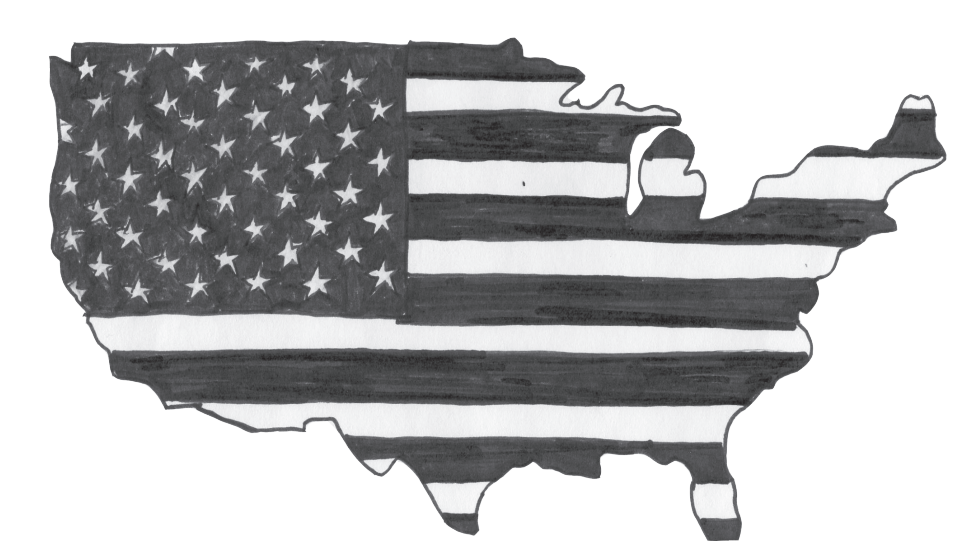
Thanks to Kurtis Lehman, the high school’s hardware technician, I’ve learned a lot about why the school holds such a tight grip on our internet activity. The driving force behind the school’s internet control is the Children’s Internet Protection Act (CIPA). Essentially, this act is a federal mandate where schools are required to monitor all internet access of minors, block harmful websites and extensions, and ensure no illegal activities are being done online by students.
This is accomplished through two avenues, one of which is our school-owned Gmail accounts. The other, more obscure method is the school’s Wi-Fi. It is school policy that all devices must be on the school’s Wi-Fi network during school, a rule that many students don’t like. The requirement to be connected to the network is to enable the school to block websites and apps that could be harmful to students.
Where many students find problems with this policy, though, is that it also blocks apps that most students don’t consider “harmful.” Admittedly, the Wi-Fi does block access to possible distractions in school, like Clash Royale, Instagram, and Snapchat; however, it also blocks many apps that are used as tools for student life, such as GroupMe and Spotify. The Wi-Fi “blocks” these sites by limiting their access to the internet, essentially making them unusable.
This does honestly make a positive impact in limiting distractions from schoolwork; however, it limits students’ ability to access the internet so severely that most students choose to refrain from joining the Wi-Fi at all, instead using personal hotspots. Students may have other motivations to stay off the internet, though, due to the popular conspiracy theory that the internet takes a screenshot of your device every 30 seconds. Thanks to Lehman, we can finally dispel that theory.
An overlooked problem with this system, though, is the lack of student awareness. While most students understand how the school is involved with our digital footprint, not everyone understands the extent. I think the school should build a stronger approach to educating students on digital policies. Not only should it be explained when we are given our accounts, but also reaffirmed at the Middle School and High School. This could prevent students from accidentally sharing information with the school that they would otherwise prefer to keep private, especially regarding personal information like mental health.
Due to the CIPA, there is not much we as students can do to lessen the school’s control of our internet access. What bothers me, though, is how the Wi-Fi network blocks apps like GroupMe. GroupMe is an important messaging app that most EGRHS sports teams use to communicate with, and I’ve missed important messages in school because of my limited access. GroupMe falls under the “internet communications” clause of the CIPA, which limits internet chatrooms and communication; this is why it’s blocked through the school. A key flaw with the CIPA was when it was passed. The original bill was enacted in 2000, and some small revisions were made in 2011. As the internet grows and new digital resources become available to students, I think it would be effective to revisit the act with a new focus on enhancing the digital student experience.